
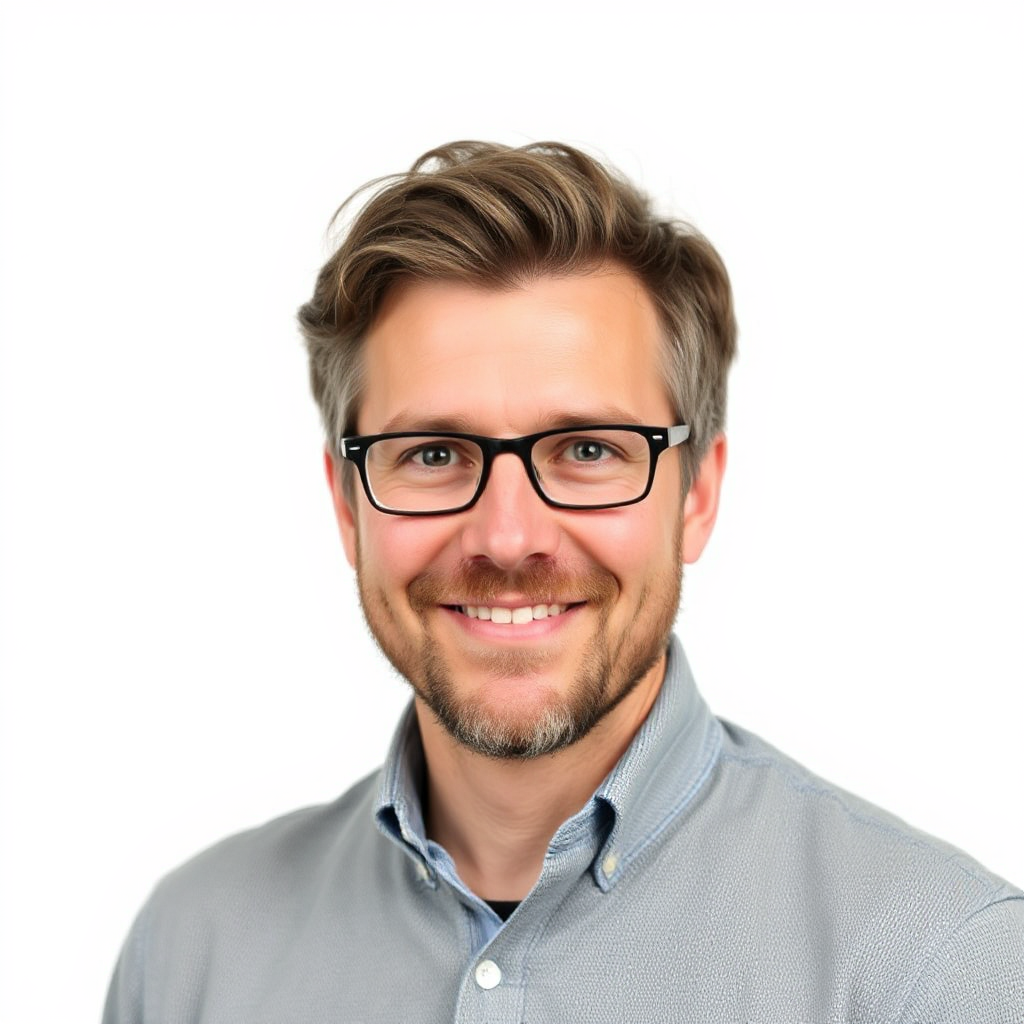
The deceased US vice-president Dick Cheney, who has died at age 84, was regarded as among the most significant occupants of that office in the nation's history. Although countless second-in-commands had to settle for peripheral or figurehead functions, Cheney wielded substantial sway during the term of George W Bush, to the point that he was frequently described as the "real president".
Bush disliked such a characterisation and stated the connection was more nuanced. He pointed out that Cheney was courteous, always referring to him in official appearances as Mr President, while he called him as Dick. Bush disputed even portrayals of their partnership as a collaboration because it suggested that they were peers. Despite these objections, Cheney found the easygoing president malleable on a broad range of governmental choices.
A Aftermath of 9/11
In charge of a contingent of neo-conservatives that encompassed Pentagon chief Donald Rumsfeld and assistant defense secretary Paul Wolfowitz, he pushed hard for the invasion of Iraq in 2003 in answer to the September 11th attacks on New York and Washington. At the time of the 9/11 assault, Bush had been taking part in a session at a school in Florida. As Bush headed for a secure location in Nebraska, Cheney assumed control, commanding the shooting down of any non-communicating aircraft heading toward the US Capitol.
Cheney said the attacks changed him, causing him to be focused on retaliation. In conjunction with other neo-conservatives, like Rumsfeld and Wolfowitz, he campaigned for a takeover of Afghanistan in an effort to seize Osama bin Laden. Cheney then strongly advocated for the military action of Iraq, although there was little proof of Saddam Hussein being involved.
Controversial Actions
He showed no remorse about the invasion, in which an reckoned 100,000 Iraqis lost their lives, nor about the harsh treatment of suspects captured after 9/11. He told CNN in 2015 that the Iraq invasion, which was predicated on faulty information circulated by Cheney, was the correct decision. "It was the right thing to do at that time. I had faith back then and I hold that view presently."
Yet even at the time, there were dissenting voices at a high level about the mishandling of Iraq. One of the administration's own delegates to the area, General Anthony Zinni (2001-03), was not retained from the post. "I witnessed, at a minimum," he wrote later "clear negligence, carelessness, and irresponsibility: potentially, lying, unfitness, and corruption."
Wider Perspective
Cheney was not completely to blame for the Iraq campaign. Even before 9/11, Wolfowitz had called for similar measures. He had composed a document outlining scenarios in which American interests might be compromised (featuring "access to vital raw materials, mostly Persian Gulf oil"). Wolfowitz had contended that "the United States should be prepared to act independently when cooperative measures cannot be arranged," explicitly referencing defense operations against Iraq.
Bush too had assumed the presidency vaguely intent on executing what his predecessor had notably declined to do in 1991; remove Saddam. After he had been sacked by the administration, the Treasury head Paul O'Neill recounted how, at the first meeting of the National Security Council in January 2001, Bush had stated his plan of lowering America's involvement in the Israeli-Palestinian conflict and mooted armed intervention against Iraq.
Bush bore a individual resentment against Saddam, thinking he had been involved in a plot to kill his parent, President George HW Bush, on a visit to Kuwait in 1993. He additionally resented that one of the biggest establishments in Baghdad had a floor mural with a likeness of his father's visage that all visitors had to tread upon.
Questioning Techniques
But it was Cheney who was one of the most vociferous supporting invading Iraq, frequently citing agency briefings that were both thin or totally deceptive. He backed what the Bush White House euphemistically referred to as "intensive questioning", the employment of waterboarding and harsh treatment.
Addressing a Senate analysis in 2014 that determined that no useful information had resulted from the torture, Cheney rejected the report as "loaded with crap". He stated to Fox News: "We requested [the CIA] to take steps and put in place procedures to catch the perpetrators who killed 3,000 of us on 9/11 and ensure it was not repeated. That was specifically what they did and they merit a lot of recognition."
External Perception
Cheney enjoyed nicknames imposed on him by detractors such as the Star Wars villain and The Prince of Darkness, and by the concept that he was a dark force directing Bush. In the journalist's 2013 volume about the pair, Days of Fire: Bush and Cheney in the White House, Cheney is reported as stating: "Am I the evil genius in the corner that remains unseen come out of his lair? It's a advantageous way to work, truthfully."
Business Interests
Controversy over his business interests accompanied him throughout his time as vice-president. While he had limited background in business but good contacts in security, especially in Saudi Arabia, he was invited to join Halliburton, one of the world's most substantial oil and gas companies, in 1995 as chairman and chief executive.
In 2000 he assumed the role of Bush's running mate for the White House. Debatably, during the Iraq war, Halliburton was granted US agreements totaling billions.
It significantly boosted his finances. His yearly earnings during his period at the corporation increased from his quarter-million dollars during his time as defence secretary to $4.4m. When he departed in 2000 he had a compensation package worth more than $20m|twenty

